Jumper's Knee: What Causes Patellar Tendon Pain, and How to Fix It
The pain at the bottom of the kneecap that bites when you jump or squat, explained — what jumper’s knee is, how it differs from Osgood-Schlatter, the loading that works, and whether you can keep playing.
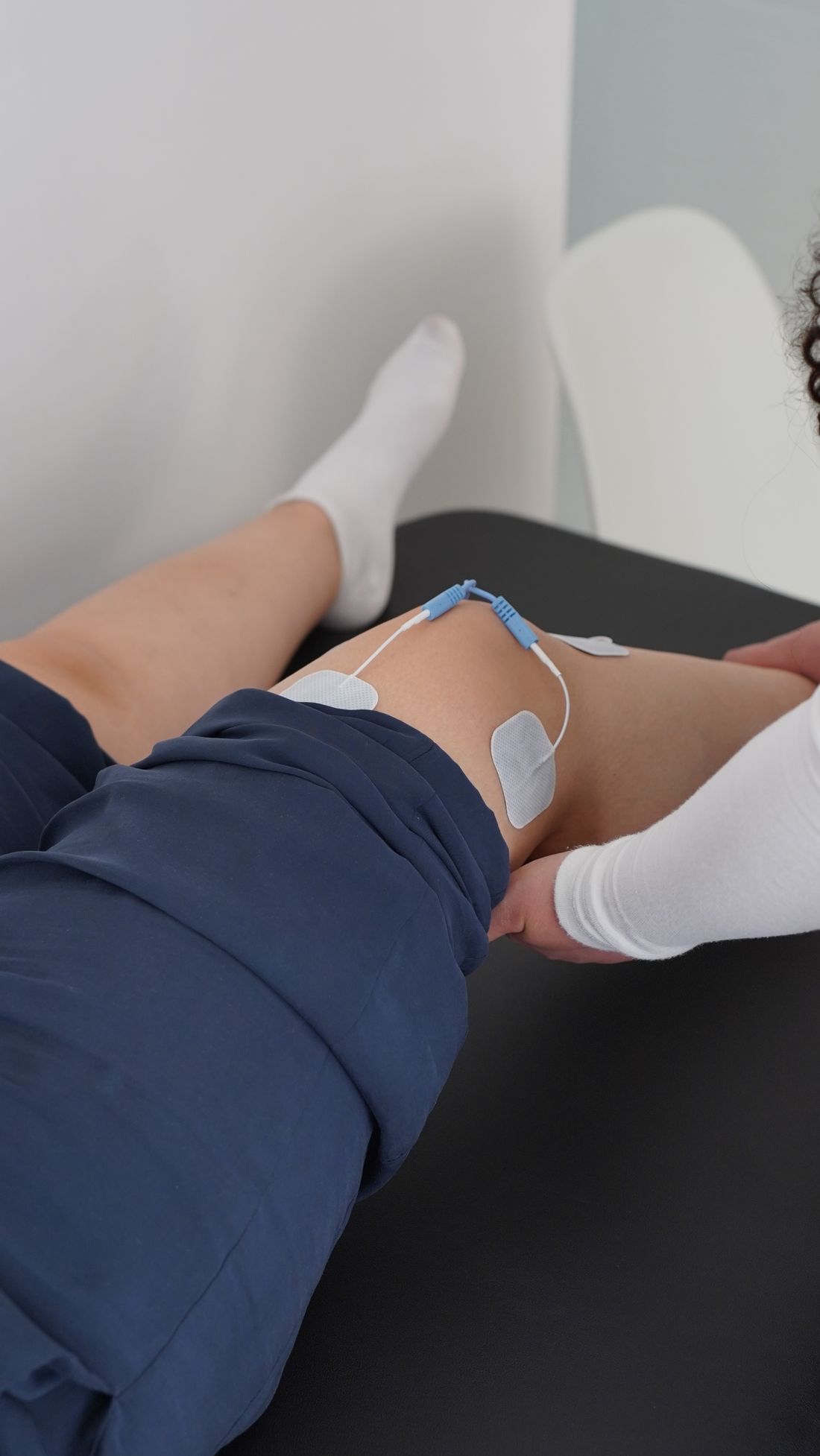 Illustrative
Pain right at the bottom tip of the kneecap that bites when you jump, land, or drop into a squat — and often warms up during sport only to ache afterward — is the signature of jumper's knee. It's a tendon problem, common in jumping athletes, and it responds to loading, not rest.
What jumper's knee is
The patellar tendon connects the kneecap to the shin and takes enormous load every time you jump, land, cut, or squat. When that load outpaces the tendon's ability to adapt — a jump in training, a packed season, hard surfaces — the tendon becomes painful and degenerative where it attaches at the bottom of the kneecap. That's patellar tendinopathy, better known as jumper's knee.
What it feels like
- Pain localized to the bottom tip of the kneecap (you can often point to it).
- Worse with jumping, landing, squatting, and stairs — especially decelerating.
- Classically warms up during activity, then aches hours later and the next morning.
- Gradual onset tied to training load, not a single injury.
Who gets it, and how it differs from Osgood-Schlatter
Jumping athletes — basketball, volleyball, track, soccer — especially teens and young adults. It's easy to confuse with Osgood-Schlatter: Osgood hurts at the bony bump lower down (on the shin) in growing children, while jumper's knee hurts at the tendon just below the kneecap and affects a slightly older, still-active group. An exam sorts them out.
What actually helps
- Progressive tendon loading — isometric holds to calm pain early, then heavy-slow resistance (controlled squats and leg work). This is the core of recovery.
- Load management — adjusting jump and training volume rather than stopping sport entirely; managing it across a season.
- Addressing the chain — calf, quad, and hip strength and landing mechanics that drive how the tendon is loaded.
- Patience and progression — rushing back to full jumping is the classic relapse.
What doesn't work well: complete rest (the tendon de-conditions and hurts again on return) and passive treatments alone. A physical therapist builds the loading program and the return-to-sport progression — see sports rehabilitation at Proof.
How long does it take?
Patellar tendinopathy is a weeks-to-months project — tendons adapt slowly. Many athletes manage it through a season with the right loading rather than sitting out entirely, but a rushed return is the most common reason it lingers.
Red flags
Seek prompt care for a sudden pop with severe pain and inability to straighten the knee or lift the leg (possible tendon rupture), significant swelling, or the knee giving way.
Jumper's knee questions, answered
Can I keep playing with jumper's knee?
Often yes, with load management - adjusting jump volume and training while loading the tendon correctly. A pain-guided approach and a therapist's plan help you stay in sport without making it worse.
What's the best exercise?
Progressive tendon loading - isometric holds early for pain, then heavy-slow resistance like controlled squats. A therapist sets the load and progression.
Is it the same as Osgood-Schlatter?
No. Osgood-Schlatter hurts at the bony bump on the shin in growing kids; jumper's knee hurts at the tendon just below the kneecap in a slightly older, active group.
How long until it's better?
Weeks to months - tendons are slow. Consistent loading works; a rushed return to full jumping is the usual cause of a relapse.